










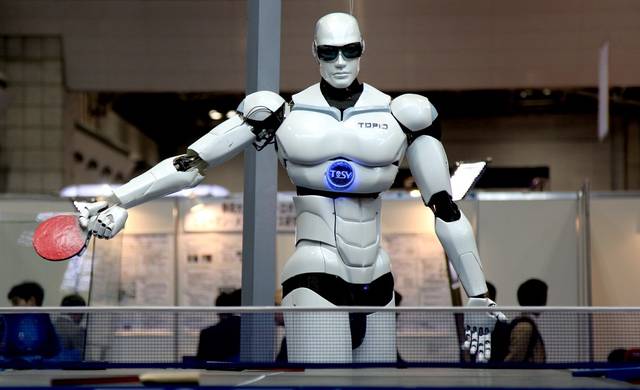
Mubasher: The world is witnessing an increasing focus on the growing role of artificial intelligence (AI) and machine learning in the global economy. However, emotional intelligence, or the human touch, could prove essential in shaping work opportunities in the near future.
“The greatest challenge of our time is automation, and by 2030 we’ll be experiencing its full effects on our economy and society,” American businessman and politician Andrew Yang told the New York Times when asked, “What Will the World Look Like in 2030?”
Meanwhile, an article by Caroline Monahan, recently published by Reuters, stresses that younger generations need to focus on human connections if they want to compete with robots for the jobs of the future.
The writer emphasizes fear of human employees becoming themselves much like robots, with many professionals now working remotely, risking to lose human interactions. “Soft skills such as intellectual insight, flexibility, intuition, and creativity will be essential for workers competing with machines that are growing more technically proficient.”
Monahan identified three main capabilities for Generation Z, people born after 1996, to develop in order to compete in the modern job market.
Effective Communication
“Generation Z should not under-emphasize the importance of relationship building, listening, communicating, working collaboratively,” Chief Talent Officer at Prudential Financial, Vicki Walia tells Monahan, referring to mentorships as a key tool to improve communication and sharing experiences within working teams.
Continuous Learning
Although many young people have advanced digital skills, they need to be pragmatic and realistic about developing new skills and capabilities. For instance, being trained in Microsoft Excel may not be enough to land a job that requires learning how to interpret data through storytelling and data visualization.
Finding Purpose
Seeking purposeful work, alongside taking mental breaks and developing healthy habits could benefit those seeking to avoid burnout, as workers are at their best when they are doing something meaningful, according to Obed Louissaint, Vice President of Talent at IBM.



